
- The Rise of Italian Brainrot: A Bizarre Online Phenomenon
- Defining Italian Brainrot: More Than Just Weird Animals
- Meet the Stars: Tralalero Tralala, Bombardiro Crocodilo, and More
- Decoding the Virality: Why Does Italian Brainrot Stick?
- Italian Brainrot Within the Broader “Brainrot” Landscape
- Celebration and Criticism: The Dual Nature of the Trend
- An Observer’s View: What Italian Brainrot Tells Us About Internet Culture
- Beyond the Absurdity: The Role of AI in Future Meme Evolution
- Italian Brainrot: A Fleeting Trend or a Cultural Symptom?
The internet, a vast and ever-evolving landscape of culture and content, constantly surprises us with bizarre trends. One such recent phenomenon that has aggressively infiltrated social media feeds, particularly on TikTok, is what’s come to be known as Italian Brainrot. If you’ve been scrolling recently, chances are you’ve encountered strange, AI-generated animals paired with nonsensical, often rhyming, Italian voiceovers. It’s weird, it’s nonsensical, and it’s undeniably catchy – but what exactly is it, and why has it become so pervasive?
At its core, Italian Brainrot, also widely referred to as “AI Italian Animals,” is a meme trend characterized by a specific formula [1, 2]. It combines AI-generated imagery of animals (often mutated, anthropomorphized, or fused with inanimate objects) with audio featuring a robotic-sounding male Italian text-to-speech (TTS) voice [2, 3]. This voice recites short, absurd monologues, frequently containing rhyming elements or random, unrelated phrases. The visual and auditory elements together create a sense of surrealism and digital chaos that, for many users, is oddly compelling and even humorous [3, 7]. The term “brainrot” itself is part of the meme’s identity, humorously (or perhaps not so humorously) suggesting the low-effort, addictive, and perhaps mentally “rotting” nature of the content it describes [7, 11].
The origins of the trend aren’t perfectly clear, but it gained significant traction on TikTok in early 2025 [1, 2]. Videos featuring this distinct style began appearing and quickly spread, with users adopting the format to create their own bizarre animal hybrids and accompanying voiceovers. My initial encounter with this trend felt like stumbling into a strange, digital fever dream – a shark in sneakers? A crocodile fused with a bomber plane? It felt both utterly ridiculous and strangely captivating, a perfect storm for algorithmic virality.
Like any popular meme universe, Italian Brainrot has its breakout stars and recurring characters. Perhaps the most recognizable is Tralalero Tralala, often depicted as a shark wearing Nike shoes [2, 3]. This character gained early popularity with a viral video featuring a nonsensical rhyme that, upon translation, included shocking and blasphemous phrases [2, 6]. Another prominent figure is Bombardiro Crocodilo, an AI-generated image of a crocodile merged with a military bomber plane, also known for controversial accompanying audio [2, 6].
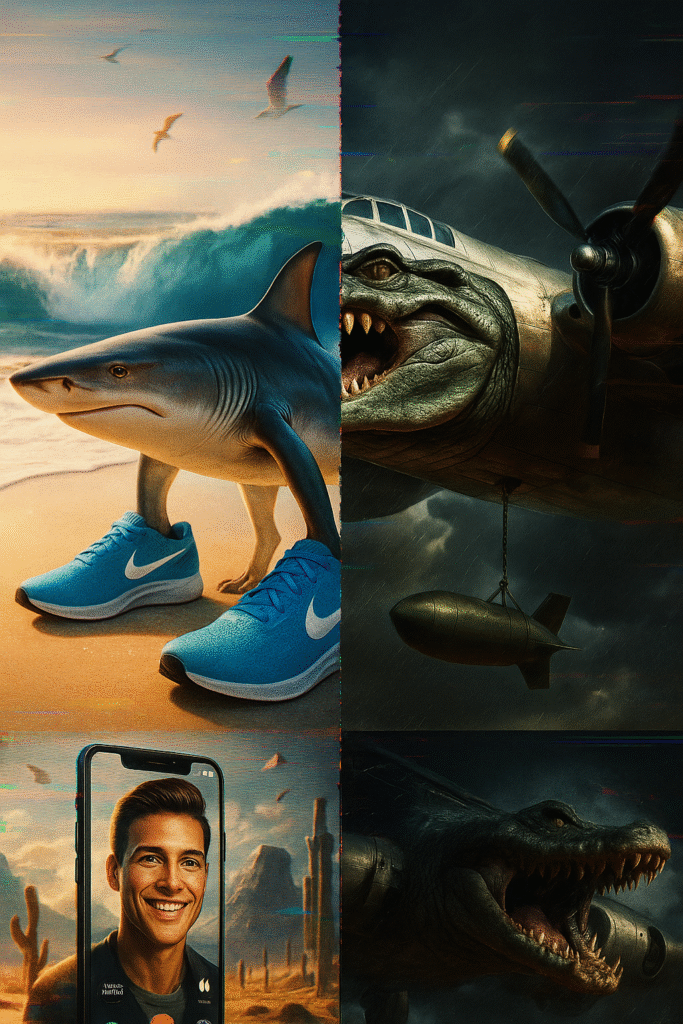
Beyond these two, the Italian Brainrot universe is populated by a growing menagerie of absurd creatures with equally bizarre names and descriptions: Lirilì Larilà (a cactus elephant), Tung Tung Tung Sahur (often represented by a wooden bat or drum), Brr Brr Patapim (a forest/monkey hybrid with large feet), and many others [1, 3, 5, 8]. The creativity, or perhaps lack thereof, in combining these elements is part of the trend’s appeal. Users actively participate by creating new characters, ranking existing ones, and even developing convoluted “lore” or “abilities” for them, adding layers of community-driven nonsense to the core concept [3, 14, 15]. It’s a genuinely fascinating, if perplexing, example of collective digital world-building driven by randomness and AI capabilities.
Secondly, the sheer absurdity and surrealism are potent ingredients for internet virality [3, 7]. In an era of information overload, content that is completely illogical and unpredictable can stand out simply because it defies categorization and expectation. It provides a brief, nonsensical escape that requires zero cognitive effort beyond processing the bizarre visuals and sounds. As one source put it, it’s content that gives “quick dopamine hits” [11].
Thirdly, TikTok’s algorithm is designed to identify and push engaging content rapidly [11]. The short, looping nature of these videos, combined with their unique audio and visuals, makes them highly shareable and prone to appearing on users’ “For You” pages, quickly exposing a massive audience to the trend [3, 11]. The fact that users can easily replicate the format using readily available AI tools also fueled its spread, turning passive viewers into active participants [3, 8]. My own feed quickly became populated with these videos, testament to the algorithm’s effectiveness in spreading this particular brand of digital chaos.
Italian Brainrot isn’t an isolated phenomenon; it’s a specific manifestation of a broader concept gaining traction online: “brainrot” content [7, 11]. This term describes online material, often found on platforms like TikTok, characterized by its low quality, repetitive nature, internal references (lore), and tendency to be highly addictive despite its perceived lack of substance or intellectual value [7, 11]. Think of trends like “Skibidi Toilet” or certain types of fast-paced, contextless video edits. Italian Brainrot fits neatly into this category, representing a strain of digital content that prioritizes algorithmic engagement and fleeting amusement over depth or meaning [11]. It’s content designed to be scrolled through mindlessly, providing just enough novelty to keep you hooked without demanding much thought.
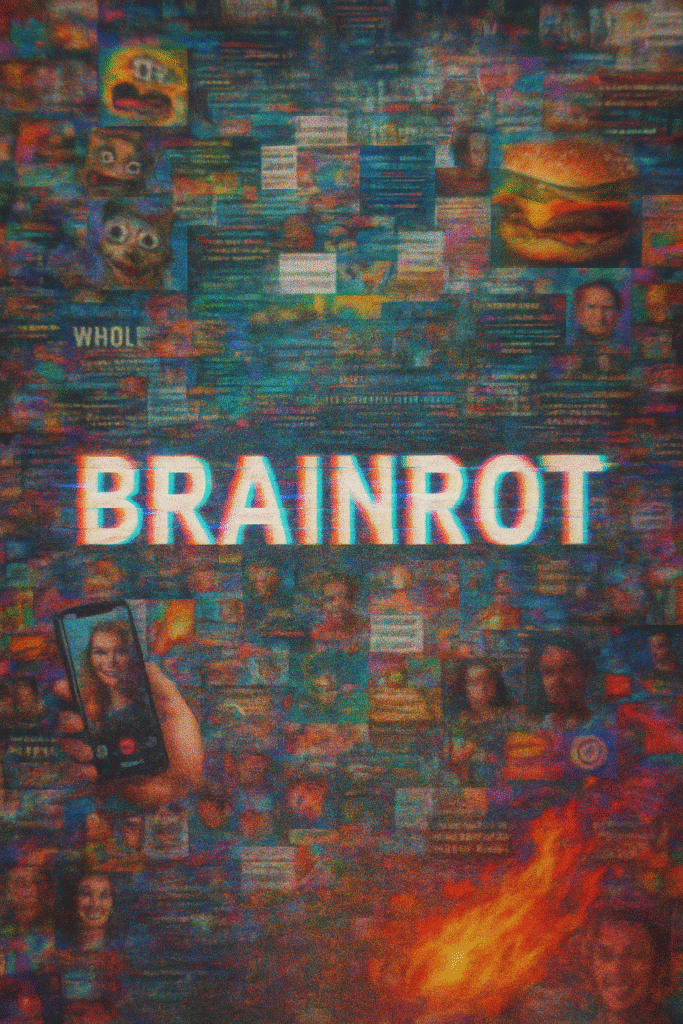
From my perspective as someone who spends time observing how online trends evolve, Italian Brainrot is a fascinating, if slightly unsettling, case study in the age of AI and algorithmic feeds. It highlights how easily distinct stylistic elements (AI visuals, specific TTS voice, rhyming nonsense) can combine to create a recognizable, viral phenomenon, almost independently of traditional “quality” or “meaning.” It’s proof that sometimes, the most successful content is simply the weirdest and most algorithmically favored.
Like most viral trends, Italian Brainrot has met with a mixed reception [1, 6]. Many users genuinely find it hilarious due to its sheer absurdity and the uncanny nature of the AI creations and voiceovers [11]. There’s a community aspect built around identifying characters, ranking them, and creating new variations, turning it into a collaborative inside joke [3, 15]. Some view it as a creative, albeit strange, use of AI technology for entertainment [1].
However, it has also faced significant criticism [1, 6]. The term “brainrot” itself implies a negative perception from some – that this type of content is symptomatic of declining online discourse and attention spans, leading to “content oversaturation” [1, 11]. More seriously, some of the translations of the Italian voiceovers have revealed deeply offensive and blasphemous language, particularly against religious figures [2, 6, 13]. This has understandably led to condemnation from those who find the content disrespectful and harmful [6, 13]. My personal experience is that the humor, if you can call it that, relies heavily on the absurdity and the robotic voice; uncovering the offensive translations certainly dampened any amusement and highlighted the problematic undertones lurking beneath the surface-level weirdness.
Having watched this trend unfold, I’ve been struck by how quickly AI can generate recognizable cultural touchstones, no matter how fleeting or bizarre. My experience researching and observing Italian Brainrot reinforces the idea that online virality in the 2020s is increasingly driven by novelty, algorithmic amplification, and a willingness among users to embrace and contribute to absurdity. It’s less about polished production or profound messaging and more about hitting a specific, often undefinable, nerve that resonates within the feedback loop of platforms like TikTok. It’s a form of digital folk art, perhaps, but one created with silicon brushes and trained on the internet’s weirdest corners. Understanding these trends often means looking beyond the surface to the mechanics of their spread and the communities that form around them.
Italian Brainrot is arguably a prime example of the early impact of generative AI on meme culture [4, 5, 8, 9]. AI tools make it easier than ever for anyone to create visually and audibly distinct content, bypassing traditional creative skills. This accelerates the lifecycle of memes, leading to faster trends that burn bright and fade quickly [4, 8]. While Italian Brainrot is a relatively simple application, it points towards a future where AI plays an even larger role in shaping online culture, potentially generating more complex, interactive, or even controversial meme forms [5, 9, 10]. It raises interesting questions about authorship, meaning, and the very nature of digital creativity when algorithms are key collaborators [8, 9]. Could future AI memes be even more abstract? More personalized? More capable of subtly influencing culture or even markets, as seen with AI’s impact on meme coins? [4, 5]
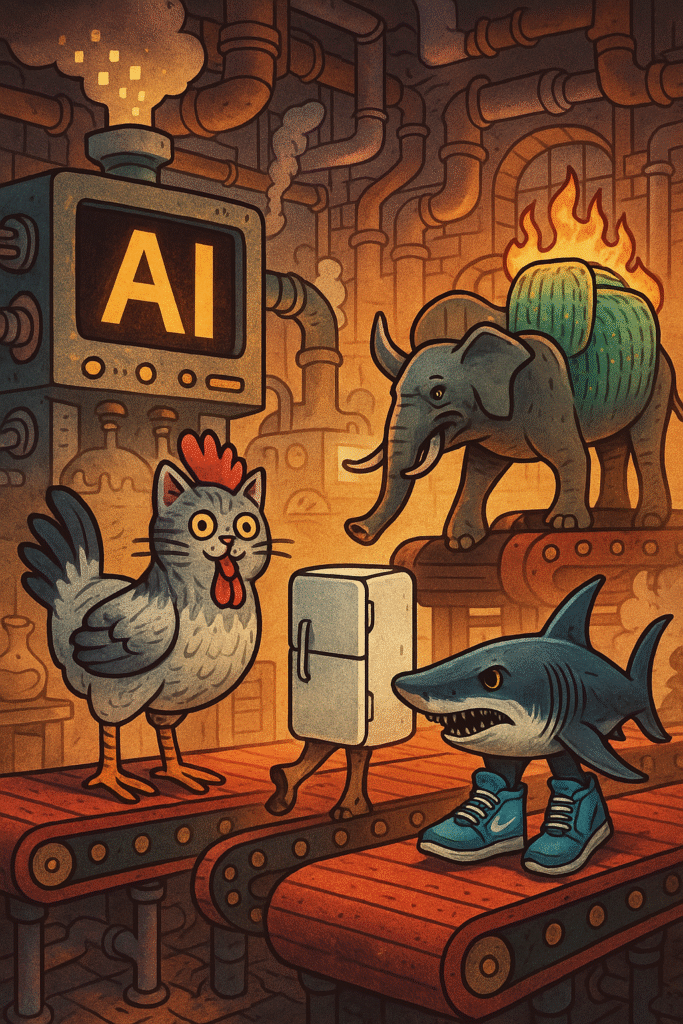
In conclusion, Italian Brainrot is a vivid, chaotic example of how AI and social media algorithms are intersecting to create new forms of viral culture. Characterized by its absurd AI animal hybrids and robotic Italian voiceovers, it captured widespread attention on TikTok in early 2025 [1, 2, 3]. While celebrated by some for its surreal humor, the trend has also been criticized for contributing to “brainrot” content and for including offensive elements [1, 6]. My own observation suggests it’s a significant case study in the evolution of online trends in the age of AI, demonstrating how bizarre, algorithmically-favored content can spread rapidly and spawn elaborate, if nonsensical, subcultures [11]. Whether Italian Brainrot is a fleeting moment of internet madness or a symptom of deeper shifts in how we consume and create content, it’s undeniably left its strange, indelible mark on the digital landscape.